
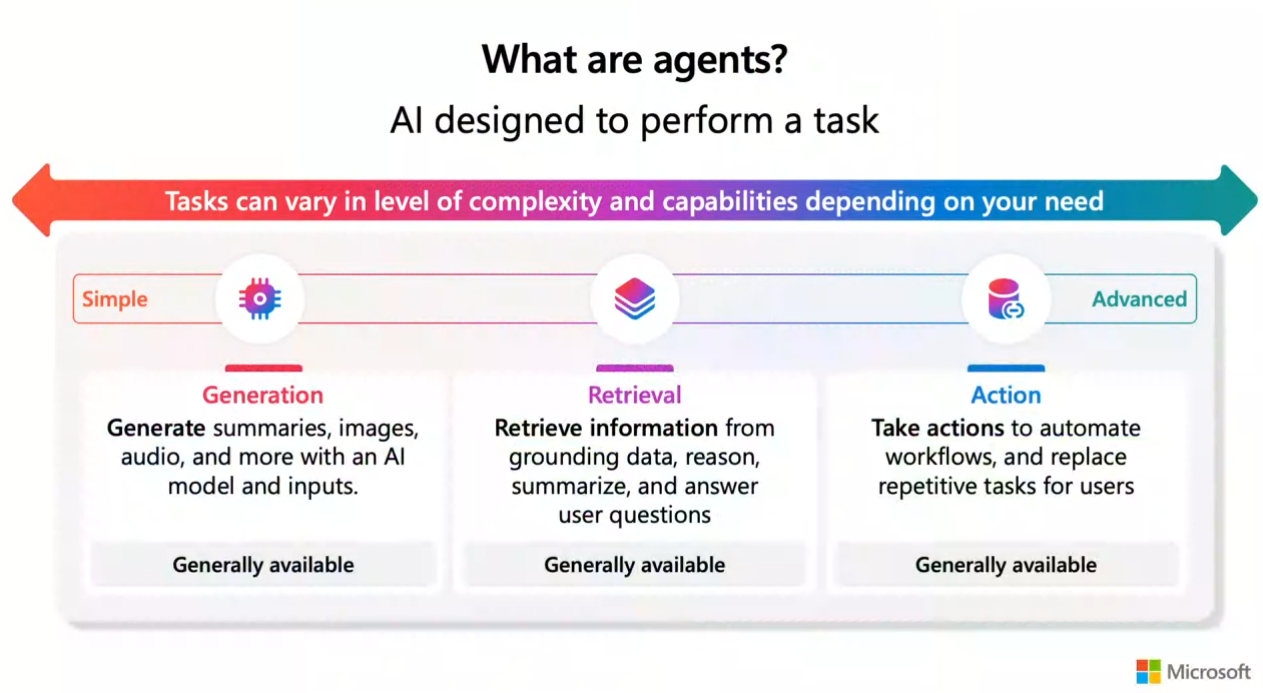
Most organisations have been building bots and agents for the last few years. Some of the agents are now integrated with GenAI to perform complex tasks and serve customers with a more human-centred experience.
What is becoming a clear Multi-AI Agent solution with humans in the loop will have more trust in the outcome and the most adoption by the customer. A multi-AI agent solution will also allow us to break a complex process/task into sub-processes/tasks where each agent will perform a very domain-specific task. There is an overhead of having an orchestration agent that will need to delegate agent-specific tasks. However, breaking down the process will make the agent simpler to implement, more accurate, testable and manageable in the long run.
Before proceeding, I must mention some of the graphics I have reused from Mads Bolaris‘s presentation.
Azure AI Foundry has been a great way to create single or multi-AI agents. Some amazing samples, such as the Azure AI Assistance Tool and Questionnaire Multi-Agent, can speed up the AI assistance implementation.
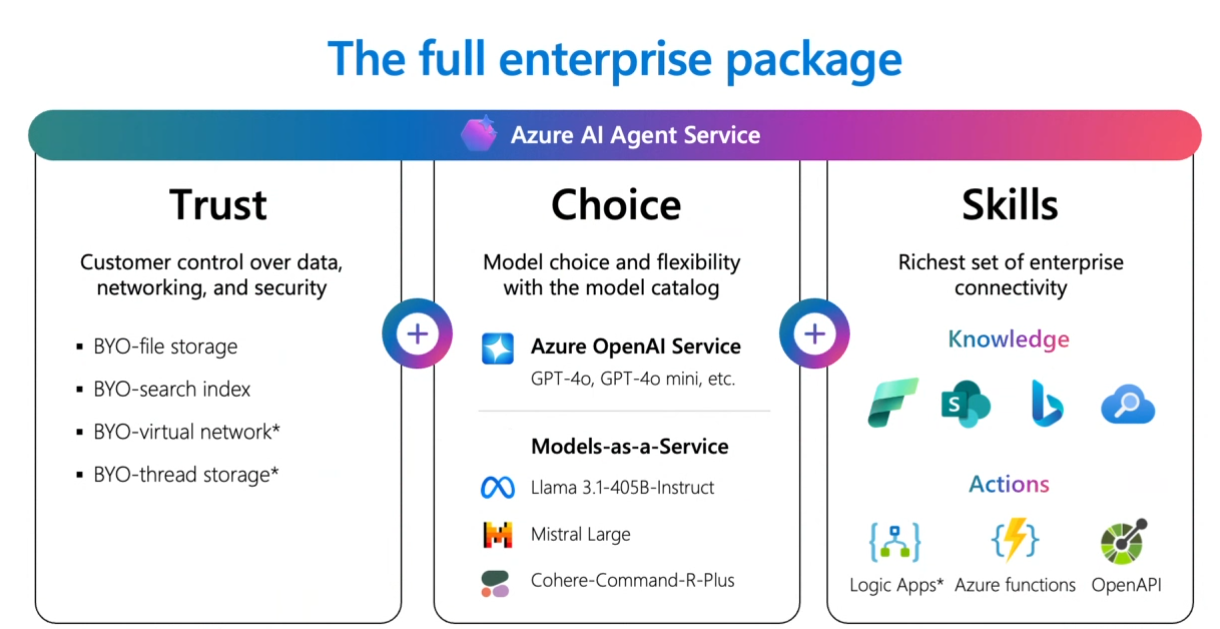
Another massive benefit of Azure AI Foundry is that it provides the full enterprise package, including data storage, building and testing agents, choice of models, prompt samples/accelerators, and the ability to add custom actions through Azure Function, Open API, etc.
Whether your solution is a single AI agent or a multi-AI agent will depend on the scenario or problem you are solving. If you are building a chatbot or an agent for a very specific task, a single AI agent might be the way to go. However, for most enterprise customers, multi-AI agents will be the solution, and we should apply the Process Framework to break the process into small, manageable chunks.
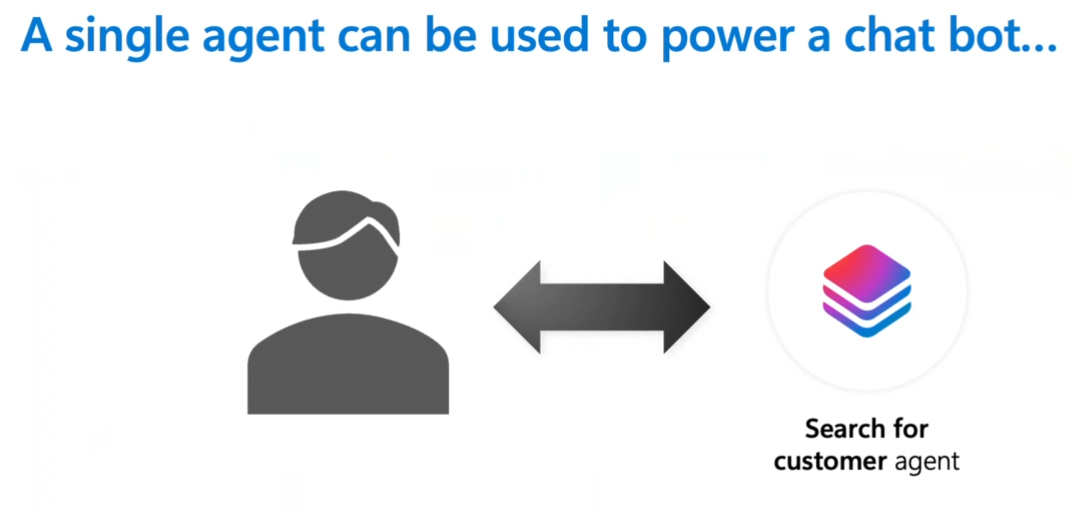
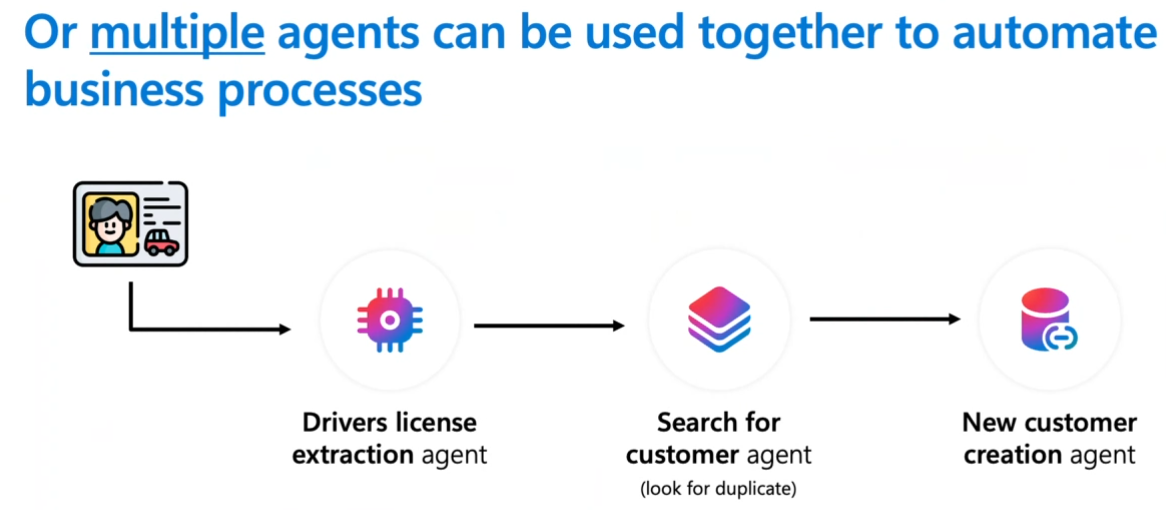
While a single (complex) AI agent may solve many of the business use cases, we should keep in mind that such an agent will be:
- More challenging to test and debug issues for different scenarios
- More likely to hallucinate
- Harder to measure the quality of the response
- Complex to build and maintain without impacting sub-functionalities/tasks
To automate and implement business processes, a multi-agent system can be implemented through Orchestrator and Worker agents.

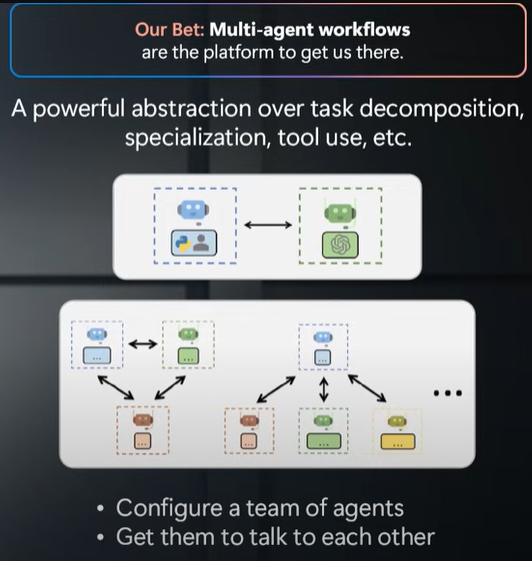
Each worker agent can validate the progress against the goal, check for the quality of output, implement hard stops to iterations, and provide a response when fulfilling the criteria.

For the Muti-agent system, orchestration options are available: AutoGen or Semantic Kernel.

There are some great blogs: Microsoft Semantic Kernel and AutoGen: Open Source Frameworks for AI Solutions, and Microsoft’s Agentic Frameworks: AutoGen and Semantic Kernel covers the option in more detail. However, in a nutshell, if you plan to deploy your multi-agent solution in production in the next few months, Semantic Kernel is the way to go. Semantic Kernel has reached version 1.0 across .NET, Python and Java and is ready for production use. Below are some useful resources and links for both frameworks;
Semantic Kernel
AutoGen
 Anupam Ranku